

-
nimda
- June 1, 2026
Understanding Organic Traffic: How Visitors Reach Websites Through Unpaid Search Results
Organic traffic is one of the most important pillars of search engine optimization (SEO). It refers to visitors who arrive on a website through unpaid search results rather than advertisements.
Unlike paid marketing channels, organic traffic is earned through relevance, content quality, and search engine trust signals. Therefore, it plays a critical role in long-term digital growth for businesses, publishers, and content creators.
What Is Organic Traffic? (Core Definition)
Organic traffic refers to website visits generated from unpaid search engine results.
Example of Organic Traffic
A user searches “how to grow tomatoes” and clicks a blog article in Google results. Since no advertising is involved, the visit is organic.
In simple terms, organic traffic happens when search engines match user intent with relevant content.
How Organic Traffic Works (Search Engine Process)
Crawling
Search engines use bots (crawlers) to discover web pages across the internet.
Indexing
Discovered pages are analyzed and stored in a search index.
Ranking
Algorithms evaluate relevance, quality, and authority to rank pages for specific queries.
Click Behavior
When users click a result, organic traffic is recorded.
Therefore, organic traffic is the final outcome of the search ecosystem.
Types of Organic Traffic Sources
Web Search
Traditional search engines like Google and Bing.
Image Search
Users discover websites through image-based results.
Video Search
Video content appears in search results and generates traffic.
News Search
Real-time news visibility contributes to organic visits.
Discovery Feeds
Personalized content feeds also generate organic traffic.
Examples of Organic Traffic in Real Scenarios
- A user searches “keyword research guide” and reads an SEO article
- Someone searches “best laptops for designers” and clicks a review post
- A visitor searches a brand name and opens its official website
- A user searches “why is my website not indexed” and reads a guide
Organic Traffic vs Other Traffic Sources
Organic vs Paid Traffic
Organic traffic is free and earned, while paid traffic comes from ads and stops when spending ends.
Organic vs Direct Traffic
Direct traffic occurs when users type a URL directly into the browser.
Organic vs Referral Traffic
Referral traffic comes from other websites, not search engines.
Why Organic Traffic Is Important (SEO Value)
- Higher relevance to user needs
- Long-term visibility potential
- Continuous traffic without ad spend
- Stronger brand trust signals
- Better engagement rates
Organic traffic connects websites with users who already have intent.
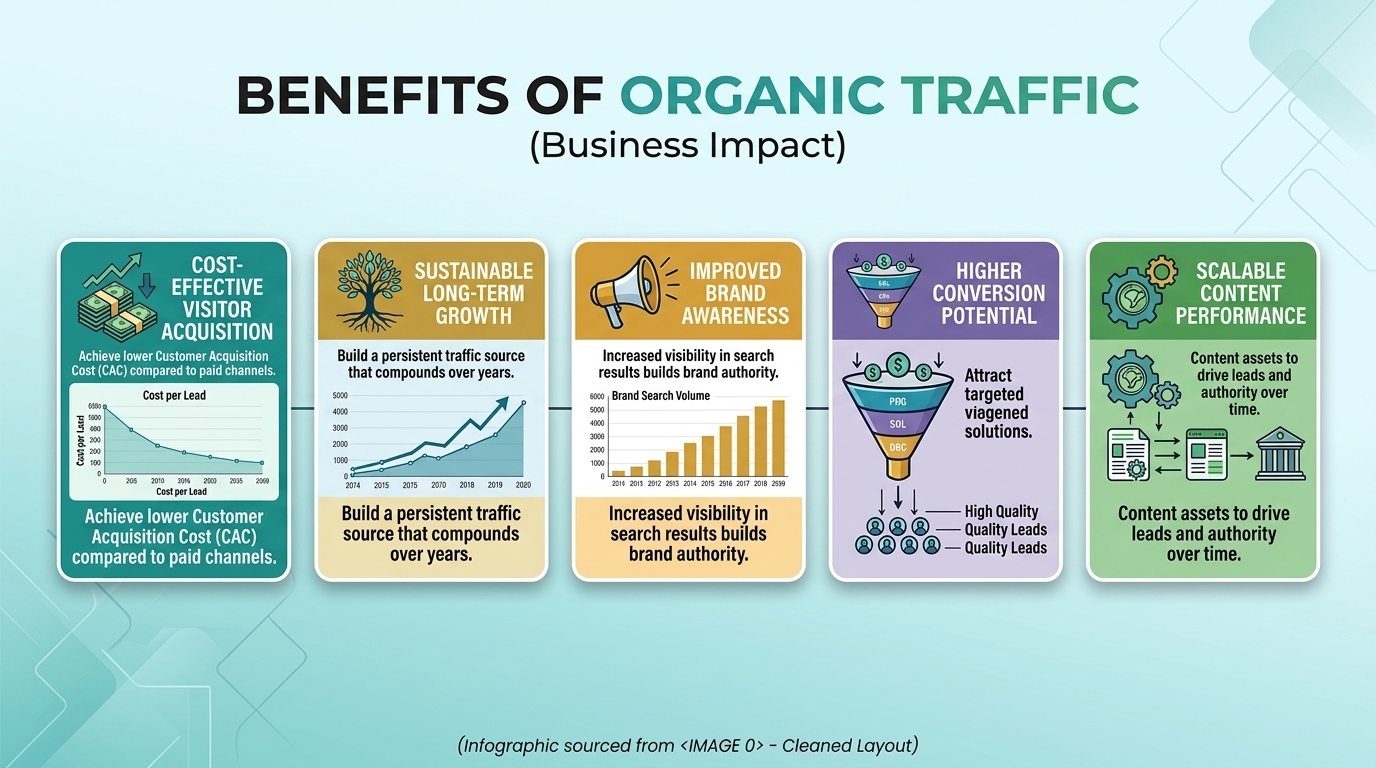
Benefits of Organic Traffic (Business Impact)
- Cost-effective visitor acquisition
- Sustainable long-term growth
- Improved brand awareness
- Higher conversion potential
- Scalable content performance
What Influences Organic Traffic Performance?
Content Relevance
Content must match search intent.
Topical Authority
Websites covering topics deeply perform better in rankings.
Technical SEO
Site structure and crawlability affect visibility.
Backlinks
High-quality links increase authority.
User Experience
Fast, readable, and well-structured pages perform better.
How to Increase Organic Traffic
Create High-Quality Content
Focus on solving real user problems.
Match Search Intent
Ensure content directly satisfies search queries.
Build Topic Clusters
Cover related subtopics to strengthen authority.
Optimize Internal Linking
Improve navigation and content relationships.
Update Existing Content
Refresh outdated pages regularly.
Improve Technical SEO
Ensure fast loading and proper indexing.
How Organic Traffic Is Measured
- Organic sessions
- Organic users
- Clicks from search results
- Impressions
- Click-through rate (CTR)
- Average position
- Landing pages
Common Myths About Organic Traffic
Myth 1: More pages = more traffic
Quality matters more than quantity.
Myth 2: Rankings guarantee traffic
CTR and search demand also affect performance.
Myth 3: Organic traffic is completely free
SEO still requires time and resources.
Myth 4: SEO delivers instant results
Organic growth takes time and consistency.
Challenges That Affect Organic Traffic
- Search algorithm updates
- Outdated content
- Technical SEO issues
- Increased competition
- Changes in search intent
Is Organic Traffic Still Important in the AI Era?
Yes. Even with AI-powered search systems, users still rely heavily on search engines to find information.
Therefore, websites with strong content quality and authority continue to earn organic visibility.
Relationship Between SEO and Organic Traffic
SEO improves visibility in search engines, while organic traffic is the result of that visibility.
Better SEO practices directly lead to higher organic traffic over time.
Conclusion
Organic traffic refers to visitors who arrive through unpaid search results. It remains one of the most valuable traffic sources because it is driven by relevance, intent, and trust rather than advertising spend.
Websites that consistently focus on high-quality content, SEO optimization, and topical authority can achieve sustainable long-term organic growth.
Recent project completed with Semantic SEO by 101sols.com is Shumayahomecare.pk