
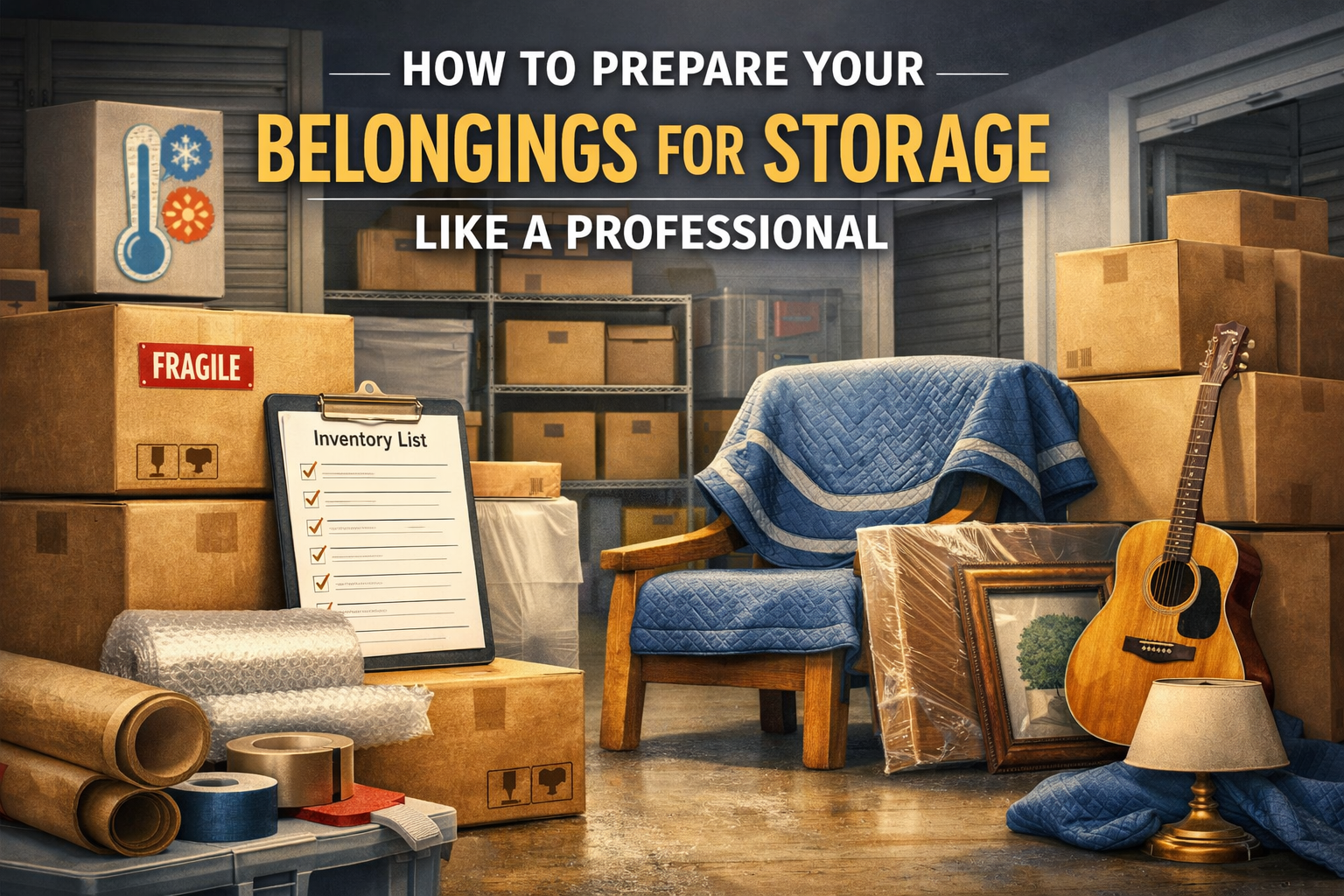


Preparing your belongings for storage—whether for a move, downsizing, or a temporary transition—requires more than simply placing items in boxes. Proper preparation protects your property, saves money on repairs or replacements, and ensures everything is in good condition when you retrieve it.
This guide outlines proven, industry-standard practices used by professional movers and storage specialists to help you store your items safely and efficiently.
At 101sols.com, we help consumers compare licensed and insured moving companies across the United States, making it easier to find reliable professionals for local, long-distance, residential, or commercial moves.
1. Clean and Thoroughly Dry All Items
Storing items without cleaning them first is one of the most common—and costly—mistakes. Dust, food residue, and moisture can lead to mold, odors, pest infestations, and permanent damage.
Best practices:
- Wipe down all furniture and hard surfaces; allow them to fully air-dry.
- Wash and dry clothing, linens, and blankets before packing.
- Empty, clean, and dry appliances such as refrigerators, microwaves, and washing machines.
- Leave appliance doors slightly open in storage to prevent odors and mildew.
2. Use High-Quality, Uniform Boxes
Professional movers recommend using strong, purpose-made moving boxes rather than reused grocery or liquor boxes, which are more likely to collapse under weight.
Box selection tips:
- Use small boxes for heavy items like books and tools.
- Use medium to large boxes for lighter items such as bedding and pillows.
- Choose boxes of similar sizes so they stack securely and maximize space.
- Reinforce the bottom of each box with quality packing tape.
3. Pack Fragile Items with Care
Breakable items require individual attention to prevent shifting and impact damage during transport and storage.
Recommended methods:
- Wrap each fragile item (plates, glasses, décor) individually using packing paper or bubble wrap.
- Place heavier items at the bottom of boxes and lighter items on top.
- Fill empty spaces with packing paper to prevent movement.
- Clearly label all fragile boxes on multiple sides.
4. Protect Furniture and Large Items
Furniture is especially vulnerable to scratches, dust, and moisture in storage environments.
Professional storage tips:
- Disassemble large furniture when possible to save space and reduce stress on joints.
- Cover sofas and mattresses with breathable fabric covers—avoid sealing them in plastic.
- Wrap wood furniture in moving blankets to prevent scratches and cracking.
- Store screws, bolts, and hardware in labeled bags taped directly to the corresponding furniture.
5. Consider Climate-Controlled Storage
Climate-controlled storage units are strongly recommended for items sensitive to temperature and humidity changes.
Items that benefit from climate control include:
- Wooden furniture and antiques
- Electronics and appliances
- Artwork, photographs, and documents
- Musical instruments and leather goods
While slightly more expensive, climate control significantly reduces the risk of warping, mold, and long-term damage.
6. Create an Inventory and Pack Strategically
An inventory list helps you track stored items and is invaluable for insurance purposes.
Organization tips:
- Number your boxes and record their contents.
- Place frequently needed items near the front of the unit.
- Leave a narrow aisle so you can access items without unpacking everything.
- Store heavier items on the bottom and lighter items on top.
Common Storage Mistakes to Avoid
- Storing food or scented items, which attract pests.
- Using plastic bags for long-term storage, as they trap moisture.
- Stacking items directly on the floor—use pallets when possible.
- Failing to label boxes clearly, making retrieval difficult later.
Choosing a Reliable Moving Company
If you are hiring professional movers, especially for an interstate move, it is important to verify that the company is properly licensed and insured.
In the United States, interstate movers must be registered with the Federal Motor Carrier Safety Administration (FMCSA) and comply with federal safety regulations. Always request:
- A written estimate
- Proof of licensing and insurance
- Clear terms regarding liability and coverage
How 101sols.com Can Help
Finding a reputable moving or packing service doesn’t have to be complicated. At 101sols.com, you can:
- Compare licensed and insured movers nationwide
- Read verified customer reviews
- Search for providers by state or service type
- Request estimates from multiple companies in one place
Our platform is designed to help you make informed decisions and avoid unreliable or unlicensed operators.
Final Thoughts
Proper storage preparation is an investment in protecting your belongings. By cleaning items thoroughly, using quality packing materials, organizing strategically, and choosing qualified professionals, you can ensure your possessions remain safe and intact—no matter how long they are stored.
A smooth, stress-free move is achievable with the right preparation and the right partners.