

Introduction
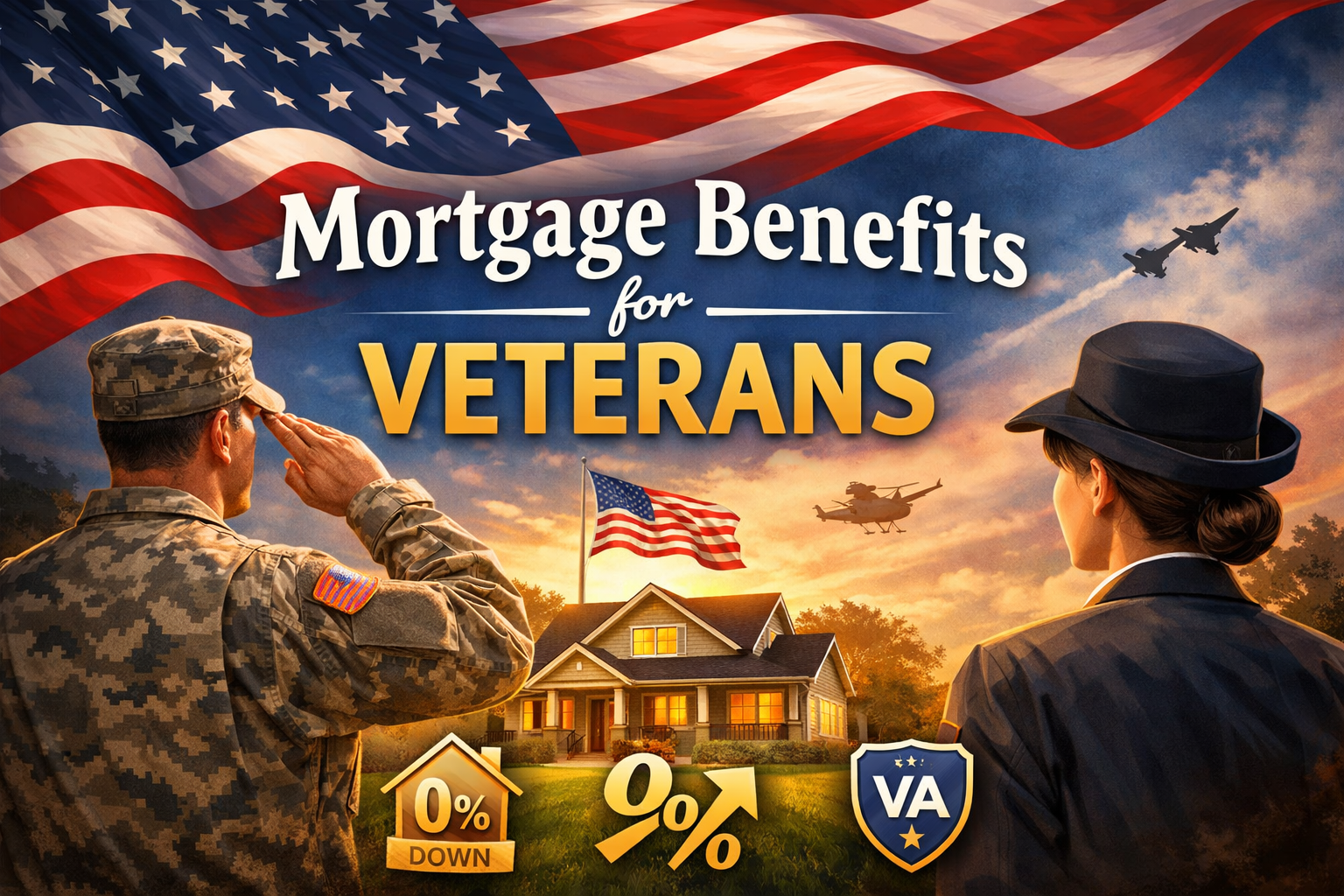
Did you know you might be able to buy a house without saving up a giant down payment? If you’ve served your country in the military, there’s a special program just for you called a VA loan. This isn’t something your neighbors might get—it’s an earned benefit that says “thank you” for your service.
Think of it like this: the government is saying, “You gave your time and dedication to our country, so we’re going to help you achieve one of life’s biggest dreams—owning a home.” A VA loan makes homeownership more possible for veterans, active-duty service members, and some surviving spouses.
In this guide, we’ll walk through what a VA loan is, why it’s such a great deal, what you need to qualify, and how to get started on your path to homeownership. Whether you’re buying your first home or refinancing an existing one, understanding VA loans could save you tens of thousands of dollars.
What Is a VA Loan?
A VA loan is a home mortgage backed by the Department of Veterans Affairs. In plain terms, that means the government promises to back you up if something goes wrong with the loan. This gives lenders confidence to offer better deals—lower interest rates, no down payment required, and no mortgage insurance.
Why It Matters for Homeowners
Here’s the big picture: buying a house is expensive. Most people need to save 20% of the home’s price before they can buy. That’s a lot of money sitting in a savings account! If you want to buy a $300,000 house, you’d normally need $60,000 saved up just to get started.
VA loans throw that requirement out the window. You can buy a home with zero down payment. You don’t need to save that $60,000. This opens the door to homeownership for thousands of veterans who might not have massive savings.
On top of that, VA loans typically come with lower interest rates than regular mortgages. A lower interest rate means lower monthly payments, which equals more money in your pocket every month.
Are You Eligible? Understanding VA Loan Requirements
Not everyone can get a VA loan—only veterans, active-duty service members, some National Guard members, reservists, and select surviving spouses qualify. Let’s break down who can use this benefit.
Military Service Requirements
Your eligibility depends on when and how long you served. Here are the basic rules:
Active-Duty Service Members: You become eligible after just 90 continuous days of active duty, and you stay eligible as long as you’re on active duty.
Veterans: This depends on which era you served. Generally, you need:
- 90+ days of active duty during wartime periods (like during WWII, Korea, Vietnam, or the Gulf War)
- 181+ continuous days of active duty during peacetime
- 24+ months of active duty for those who served after certain dates
National Guard & Reserve Members: You’re eligible after 90 days of active federal service, or with 6+ years of service in the National Guard.
Surviving Spouses: If your spouse died in service or from a service-connected disability, you may qualify.
Getting Your Certificate of Eligibility
Before applying for a VA loan, you’ll need to get a Certificate of Eligibility (COE). Think of this as your membership card—it proves you qualify for the benefit.
The good news? You don’t have to do much work. Your lender can get this for you in just a few minutes by checking the VA database. Or you can request it yourself through the VA’s website (VA.gov). The process is simple and free.
Understanding the Numbers: What You Need to Qualify
Beyond your military service, lenders will look at your finances. Don’t worry—the VA’s requirements are friendlier than traditional mortgages.
Credit Score
Here’s something that surprises people: the VA doesn’t have a minimum credit score requirement. That’s right—there’s no official number you have to hit.
However, most lenders typically look for a credit score of around 620, though some will work with borrowers who have scores as low as 550 or 580. Your credit score matters because it affects your interest rate. A higher score usually gets you a better rate and lower monthly payments.
Income and Employment
The VA doesn’t set income limits—you can earn any amount. But your lender will check that your income is stable and that you can actually afford the monthly mortgage payment.
You’ll typically need to show:
- Tax returns from the past two years
- Recent pay stubs (usually the last 30 days)
- Bank and investment account statements
- Proof of stable employment (ideally 24+ months with the same employer)
If you’ve recently changed jobs or are self-employed, you might need to provide extra documents. Just be honest about your situation—lenders understand that people change jobs.
Debt-to-Income Ratio
Here’s a term that sounds complicated but is actually pretty straightforward: debt-to-income ratio (DTI). This is the percentage of your monthly income that goes toward debt payments.
Let’s say you earn $5,000 a month and your total debts (including the new mortgage) are $1,640. Your DTI would be 33% ($1,640 ÷ $5,000).
The VA recommends keeping your DTI at 41% or less. This tells lenders you have room in your budget for the mortgage payment and won’t get in over your head.
The Big Advantages: Why VA Loans Are a Game-Changer
Let’s talk about what makes VA loans special. Here are the main benefits that set them apart from regular mortgages.
No Down Payment Required
This is the biggest advantage. With a regular mortgage, you usually need to put down 3–20% of the home’s price. VA loans? Zero down payment required.
That’s huge because it means you can buy a home without years of saving. If you find the right house and you’re ready to buy, you can move forward immediately.
No Mortgage Insurance
When you get a regular mortgage without a 20% down payment, you have to pay something called private mortgage insurance (PMI). This is extra money you pay every month to protect the lender if you can’t pay the loan.
PMI can add $100 or more to your monthly payment—thousands of dollars a year! VA loans? No PMI required, ever. This saves you serious money over the life of your loan.
Lower Interest Rates
VA loans typically come with lower interest rates than conventional mortgages. Why? Because the government backs the loan, lenders see it as lower risk. That lower risk means better rates for you.
Even a difference of 0.5% might not sound huge, but on a $300,000 loan, it could mean saving $50+ per month—or hundreds of dollars a year.
Capped Closing Costs
When you get any mortgage, you pay closing costs—fees for appraisals, title insurance, and other services. With VA loans, the VA caps some of these costs, so you won’t pay as much as you would with a regular loan.
Reusable Benefit
Here’s something cool: you can use your VA loan benefit more than once. If you pay off your first VA loan, you can use the benefit again to buy another home. Some veterans have bought multiple homes using this benefit over their lifetime.
The Trade-off: Understanding the VA Funding Fee
Now, let’s talk about the one cost that comes with VA loans: the funding fee. This is important to understand.
The funding fee is a one-time charge that gets added to your loan amount. It’s the government’s way of keeping the VA loan program sustainable for future veterans.
How Much Is the Funding Fee?
The amount depends on a few things, mainly your down payment and whether you’ve used the benefit before:
- First-time use with no down payment: 2.15% of the loan
- Subsequent uses: 3.3% of the loan
- Streamline refinance: 0.5% of the loan
So on a $300,000 home with no down payment (first time), you’d pay about $6,450 in funding fee. This gets rolled into your mortgage, so you don’t pay it all at once.
Who’s Exempt?
Here’s some great news: certain veterans don’t pay the funding fee at all. If you receive VA disability compensation, you’re exempt. This is the government’s way of saying thank you to those who made sacrifices for their country.
VA Loans vs. Conventional Mortgages: The Comparison
Let’s put VA loans side-by-side with regular mortgages so you can see the real difference.
The Bottom Line: VA loans let you buy a home with no money down, no mortgage insurance, and lower interest rates. The trade-off? You pay a funding fee, and you can only use it for your primary home (not vacation homes or rentals).

Step-by-Step: How to Get a VA Loan
Ready to get started? Here’s the process broken down into simple steps.
Step 1: Get Your Certificate of Eligibility
Before you apply, you need your Certificate of Eligibility (COE). This proves to the lender that you qualify.
What to do: Ask your lender to pull your COE from the VA database (it takes minutes), or apply yourself through VA.gov’s eBenefits portal. There’s no cost, and it’s quick.
Step 2: Find a VA-Approved Lender
Not all lenders handle VA loans, so find one that does. Look for lenders that specialize in VA mortgages—they’ll know all the rules and can guide you through the process.
What to do: Shop around with 2–3 lenders to compare interest rates and fees. Get pre-qualification letters from each one.
Step 3: Get Pre-Qualified
Pre-qualification means the lender reviews your finances and tells you roughly how much you can borrow. This isn’t an official loan yet—it’s just a ballpark number.
What to do: Provide your income, employment history, debts, and bank statements. The lender will calculate your DTI and let you know your borrowing power.
Step 4: Find Your Home and Make an Offer
Now comes the fun part—house hunting! Find a property that works for your budget and lifestyle.
What to do: Work with a real estate agent. Make an offer on a home you like. Your offer should be contingent on getting VA loan approval.
Step 5: Get a VA Appraisal
Unlike conventional loans, VA loans require a special VA appraisal. This isn’t just about determining the home’s value—it also ensures the home meets safety and quality standards set by the VA.
What to do: The lender will order the appraisal. You don’t do much here; just be available if the appraiser needs access to the home.
Step 6: Underwriting and Loan Processing
The lender digs deep into your finances. They verify employment, pull your credit report, and confirm all the numbers add up.
What to do: Respond quickly to any document requests. The faster you provide what they ask for, the faster you close on your home.
Step 7: Close on Your Home
Closing day is when you sign the final paperwork and get the keys to your new home.
What to do: Review all documents carefully. Bring a valid ID. Sign where indicated. Congratulations—you’re now a homeowner!
Key Considerations for Successfully Using Your VA Loan
Here are some important things to keep in mind to make the most of your benefit.
The Property Must Be Your Primary Residence
Important rule: You can only use a VA loan to buy a home you’ll actually live in. You can’t use it to buy a vacation home, rental property, or investment property.
Why? The program is designed to help veterans and service members find housing for themselves and their families—not to help them become landlords or real estate investors.
Property Must Meet VA Standards
The VA wants to make sure your home is safe and in decent condition. The VA appraisal will check for things like:
- Sound structure and foundation
- Working plumbing and electrical systems
- Safe heating system
- No major health or safety hazards
You Can Use the Benefit Multiple Times
Here’s something exciting: your VA loan benefit doesn’t disappear after you use it once. If you sell your home and pay off the loan, you can use the benefit again to buy another home.
Some veterans have used this benefit two, three, or even more times over their lifetime. It’s a benefit that keeps giving.
Keep Proof of Eligibility
Always keep your Certificate of Eligibility safe. You’ll need it when you apply for a VA loan, refinance, or use your benefit again in the future.
Taking It to the Next Level: Advanced VA Loan Options
Once you own a home with a VA loan, you have additional options available.
VA Streamline Refinance (IRRRL)
If you already have a VA loan and want to lower your interest rate, the VA Streamline Refinance (officially called Interest Rate Reduction Refinance Loan or IRRRL) is perfect.
This refinance has way less paperwork than a normal refinance and lower costs. The funding fee is just 0.5%. If you’re looking to save money on your current VA loan, this is worth exploring.
VA Cash-Out Refinance
Already own a home with a VA loan? You can refinance and take out cash based on your home’s equity. This is great if you need money for home improvements, debt payoff, or other major expenses.
With a cash-out refinance, you can typically refinance up to 90% of your home’s value.
Energy-Efficient Improvements
The VA allows you to finance up to $6,000 in energy-efficient improvements (solar panels, heat pumps, new windows) into your mortgage. This helps you save on utilities while paying for upgrades gradually.
Common Questions Veterans Ask
Will the VA funding fee hurt my chances of getting approved?
No. The funding fee is just a cost—it doesn’t affect your approval chances. Your lender only cares about your income, credit, and DTI.
Can I get a VA loan if my credit isn’t perfect?
Yes! The VA doesn’t set a minimum credit score, and many lenders work with credit scores below 620. A lower score might mean a slightly higher interest rate, but you can still qualify.
What if I haven’t used my VA loan benefit yet?
You have full entitlement, which means you can borrow as much as you can afford. There’s no limit on how much you can borrow (as long as you can afford the payments).
Can my spouse use my VA loan benefit?
Generally, no. However, a surviving spouse of a veteran who died in service or from a service-connected disability may qualify for a VA loan on their own.
Do I need to be currently serving to get a VA loan?
No. Veterans who’ve separated from active duty are fully eligible. Active-duty service members are eligible too. Eligibility doesn’t expire.
Wrapping Up: Your Path to Homeownership
A VA loan is one of the most powerful financial benefits available to veterans and service members. Think about what you get: no down payment, no mortgage insurance, lower interest rates, and reusable benefit. That’s a combination you won’t find anywhere else.
Here’s what you should do next:
- Verify your eligibility – Check your service dates and get your Certificate of Eligibility
- Talk to a VA lender – Get pre-qualified and understand your borrowing power
- Start house hunting – Find a home that fits your budget and dreams
- Take action – Don’t let this benefit sit unused
The fact that you served your country has already earned you this benefit. Now it’s time to use it to build the future you deserve—one that includes a home of your own.
Homeownership changes lives. It gives you stability, builds wealth, and creates a place for your family to make memories. Your VA loan benefit makes this possible. You’ve got this!
Ready to explore your VA loan options? Connect with a VA-approved lender today and take the first step toward homeownership.